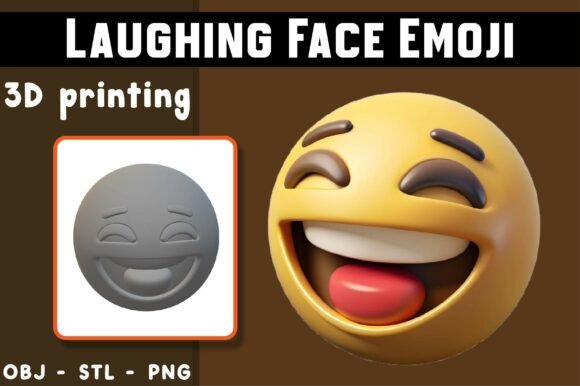
Laughing Face Emoji 3D Model: A Guide to Choosing and Printing with Care
The Laughing Face Emoji 3D Model brings a whimsical, expressive character to life in three dimensions. Designed with charm and creativity in mind, this model captures the joy of a new creature emerging into the world—perfect for those who appreciate fantasy-themed art or want to add a unique touch to their collections. Whether you're a seasoned 3D printing enthusiast or just starting out, understanding how to approach this model can make all the difference in achieving a satisfying result.
What is the Laughing Face Emoji 3D Model?
This digital creation is more than just an emoji brought to life—it's a detailed 3D sculpture that blends playful aesthetics with technical precision. The model features expressive geometry, subtle textures, and a design that encourages both artistic appreciation and practical use. It’s ideal for decorative purposes, educational projects, promotional materials, or personal collection pieces. Available in multiple formats like STL, OBJ, and PNG, it offers flexibility for different applications such as 3D printing, augmented reality (AR), or digital rendering.
Why People Choose This 3D Model
Many creators and collectors are drawn to the Laughing Face Emoji 3D Model because of its unique blend of cuteness and complexity. It adds a sense of wonder and imagination to any space or project. Educators may use it to teach design principles or animation concepts, while marketers might incorporate it into product displays or branding elements. Hobbyists enjoy experimenting with it on their home 3D printers, and entrepreneurs see potential in using it for custom merchandise or event decorations.
Common Mistakes When Using the Laughing Face Emoji 3D Model
While the model is designed to be user-friendly, there are several common pitfalls that users encounter when working with it. Here are some key mistakes to avoid:
- Skipping the Preview Step: One of the most frequent errors is not previewing the STL file in a slicer before printing. Even though the model is labeled as beginner-friendly, orientation and scaling play crucial roles in print quality.
- Overlooking Support Requirements: Some parts of the model, especially areas with overhangs or intricate details, may require supports. Failing to plan for these can lead to poor structural integrity or unsightly prints.
- Misusing File Formats: Confusion often arises between the STL and OBJ files. The STL is meant for printing, while the OBJ is best used for visualization or AR. Using the wrong format can cause unnecessary delays or complications in your workflow.
- Ignoring Printer Specifications: Not all 3D printers perform equally. High detail levels in the model mean it needs a printer capable of fine resolution and possibly a good extruder setup. Attempting to print it on a low-resolution machine without adjustments can yield disappointing results.
- Underestimating Post-Processing Needs: While the model is optimized for smooth printing, it may still benefit from sanding, priming, or painting after printing. Skipping these steps can leave the final piece looking unfinished or less vibrant than intended.
How These Mistakes Impact Your Results
Each mistake outlined above can affect different aspects of your experience. For example, skipping the preview step could lead to incorrect scaling, which affects the size and proportions of your printed piece. If you don’t account for supports, certain facial features might sag or collapse during printing, ruining the expressive look of the emoji.
Using the wrong file format might limit your ability to showcase the model effectively. If you try to render the STL in software expecting an OBJ, you might miss out on color or texture details. Similarly, ignoring your printer's capabilities can result in wasted time and materials if the model doesn't print cleanly or at all.
Practical Tips to Avoid Errors
To ensure you get the most out of the Laughing Face Emoji 3D Model, consider the following advice:
- Always Preview Before Printing: Open the STL file in your preferred slicing software. Adjust the scale to fit your desired display space and rotate the model to minimize support structures. This step helps prevent last-minute surprises and ensures a smoother printing process.
- Use Supports Strategically: Identify where overhangs occur in the model, such as the top of the head or under the chin. Add supports only where necessary, and choose a material that’s easy to remove post-print, like PVA or breakaway supports.
- Select the Right Format for Your Purpose: If you’re planning to print the model, use the STL file. For digital showcases or AR applications, the OBJ format will give you the best visual fidelity. Keep the PNG handy as a reference image but remember it’s not printable.
- Optimize Printer Settings: Ensure your printer is calibrated correctly. Use a high-quality filament, and adjust the layer height to around 0.1mm for finer details. A heated bed can also help with adhesion and reduce warping.
- Plan for Post-Processing: After printing, take a moment to assess whether the model needs finishing touches. Gentle sanding followed by a primer coat can significantly enhance the appearance, especially if you plan to paint the emoji for a more vivid look.
Realistic Examples of Better Approaches
Let’s walk through a few scenarios to illustrate better approaches:
Example 1: Home Printer Setup
A hobbyist wants to print the Laughing Face Emoji 3D Model on their Creality Ender-3. They open the STL file in Cura and notice the face has a slight tilt. By rotating the model so the flat base is on the build plate, they eliminate the need for excessive supports and improve the first-layer adhesion. They also set the infill to 20% for balance between strength and speed.
Example 2: Digital Display for a Brand Campaign
A marketer plans to feature the emoji in a social media campaign. Instead of using the STL file for digital previews, they opt for the OBJ version. This allows them to render the model with realistic lighting and colors in Blender, making it suitable for high-quality visuals that match the brand’s tone.
Example 3: Classroom Project
An educator uses the model in a design class to show students how to interpret digital blueprints. They emphasize checking the model's geometry in Meshmixer before exporting it to the printer. Students learn about clean mesh structure and the importance of pre-print checks, leading to a successful learning outcome.
What to Check Before Making a Decision
Before downloading or purchasing the Laughing Face Emoji 3D Model, take a few moments to evaluate your goals and tools. Ask yourself:
- Am I using the right file format for my purpose? (e.g., STL for printing, OBJ for digital display)
- Do I have the necessary equipment to print it successfully? (e.g., a reliable 3D printer, appropriate supports, and materials)
- Is my printer calibrated and ready for high-detail prints?
- Will I need to do any post-processing to achieve the desired finish?
- Do I understand the limitations of AI-assisted 3D models and how they might vary across devices?
By answering these questions honestly, you’ll avoid costly missteps and maximize your satisfaction with the final product.
Conclusion
The Laughing Face Emoji 3D Model is a delightful and versatile asset for a wide range of users. Its gentle charm and expressive design make it stand out in both physical and digital spaces. However, success with this model depends on thoughtful preparation and attention to detail. From choosing the correct file format to optimizing printer settings and accounting for supports, each decision contributes to the overall quality and enjoyment of the finished piece.
With the right approach, you can transform this magical emoji into a tangible masterpiece that reflects your creativity and craftsmanship. So take your time, follow best practices, and let the laughter come alive in your hands—or your screen!